Saunas
Best Barrel Sauna: Honest Picks for Every Budget
Independent research into the best barrel saunas—real specs, owner-reported durability, honest pros/cons, and budget-to-premium picks across wood type and heater style.
Disclosure We may earn a commission from links on this page, at no extra cost to you — and we only recommend gear we'd stand behind. How this works.
Sweat Kingdom Custom Barrel Sauna
Best for Buyers who want a permanent, US-built barrel sauna and can invest well beyond entry-level kits
The real deal for buyers committed to a permanent outdoor installation. Not a starter purchase.
The good
- Made to order in the US
- Configurable sizing, wood species, and heater type
- Full electric or wood-burning heater options
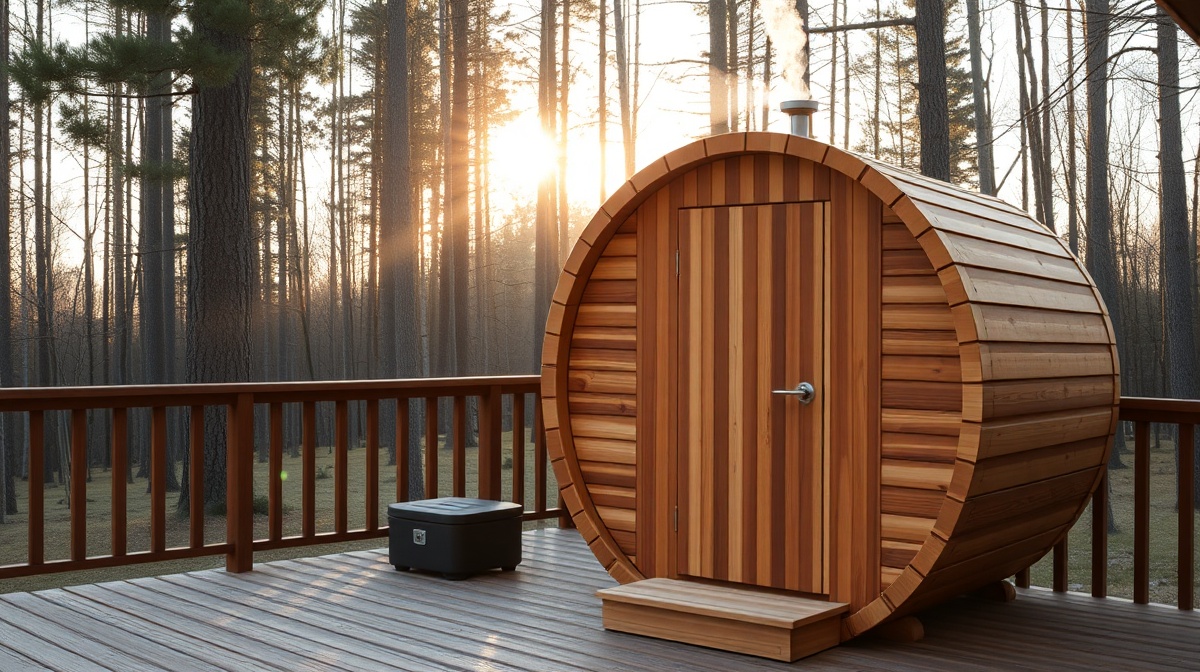
- Authentic barrel sauna format with proper stave construction
The catch
- Significant price commitment ($4,000–$25,000+ as of July 2026)
- Lead times vary—confirm with brand
- Requires site prep and likely professional electrical work
Coronado 2-Person Hemlock Deluxe Infrared Sauna with 6 Carbon Heaters
Best for Indoor infrared sauna buyers who want the most substantial Amazon option
Best Amazon indoor infrared option for buyers who want a dedicated sauna room without a contractor. Not for anyone expecting a barrel sauna experience.
The good
- Six carbon heaters for even heat distribution
- Standard 120V—no special wiring needed
- Reviewers describe manageable assembly for two people in an afternoon
- 2-person capacity
The catch
- Infrared cabin, not a barrel sauna
- Hemlock is less durable than cedar, especially in humid or outdoor conditions
- 2-person stated capacity is tight in practice
- Dry infrared heat differs significantly from traditional steam experience
OUTEXER Far Infrared Sauna Home Sauna Spa Room Canadian Hemlock Wood 1200W
Best for Solo users wanting a highly rated compact indoor infrared sauna under $1,100
Strong mid-range infrared pick for solo users. The glass door and rating justify the price, but don't confuse it with a steam sauna.
The good
- Highest rating in its price band (4.6★ from 551 reviews)
- 1,200W heats efficiently for one person
- Tempered glass door adds visual openness to compact spaces
- Chromotherapy lighting included
The catch
- Small interior—single person only in practice
- Hemlock construction, not cedar
- Low-EMF claim not backed by published measurements
- Not a barrel sauna
SereneLife Portable Steam Sauna Tent with Extra Large 4L Steamer
Best for Apartment dwellers or first-timers wanting a low-cost introduction to steam heat
Fine for what it is—an entry-level heat tool. Buy it knowing exactly what it is, not as a barrel sauna substitute.
The good
- 3,000 verified reviews—largest sample in this price range
- Genuinely portable and stores flat
- 4L steamer delivers real steam heat
- Very low financial risk for testing heat therapy
The catch
- Head-out tent design feels clinical, not relaxing
- Fabric enclosure not built for long-term daily use
- Steamer requires regular refilling
- Not comparable to a wood sauna in any respect
Manastin 2 Person Portable Steam Sauna for Home
Best for Couples or pairs wanting the best-rated portable steam tent option on Amazon
Top of the portable steam tent category on rating and two-person usability. Best for pairs who want a shared heat session without the barrel sauna price tag.
The good
- 4.4★ from 500 reviews—strong rating for the category
- Two-person format with two foldable chairs included
- 9-level remote control lets you adjust without exiting
- Competitive price versus comparable units
The catch
- Fabric tent format, not a wood sauna
- Two-person capacity is cozy at best
- Not a permanent installation
- Same head-out design limitations as category peers
Barrel saunas heat faster than traditional box-cabin designs. The curved ceiling forces hot air to circulate back down rather than pool at the top. Manufacturers including Dundalk Leisurecraft and SaunaLife cite 30–45 minutes to target temperature versus 60-plus for a flat-roofed cabin of equivalent volume—that figure comes from their product literature and has not been verified by independent thermal testing, so treat it as a manufacturer claim rather than a confirmed spec. The structural logic behind it holds up regardless: round stave construction sheds water and resists the racking that eventually opens up gaps in flat-panel builds.
This guide covers what you can actually verify: wood species specs, heater trade-offs, recurring patterns in owner feedback, and honest pricing. Where we’re working from manufacturer data or aggregated owner reviews rather than independent testing, we say so.
What Makes a Good Barrel Sauna
Wood species matters more than most brands admit. Western red cedar is the industry benchmark. Its natural tannins resist moisture, mildew, and insects. Low density keeps dimensional movement through humidity cycles minimal. Nordic spruce (thermally modified or not) and hemlock are common cost-cutting substitutes. Thermowood—heat-treated softwood with resins and sugars driven out—is a serious alternative; the Finnish Thermowood Association’s published handbook documents dimensional stability improvements of up to 50% over untreated pine, though buyers should verify which grade and treatment class applies to a specific product.
Stave thickness matters, especially in cold climates. A 1.75-inch stave holds interior temps noticeably higher after the heater cuts off compared to a 1.5-inch stave—a difference that’s academic at 40°F but consequential at -10°F.
Heater type shapes the whole experience. Wood-burning heaters produce traditional löyly—steam from water poured on hot rocks—and work off-grid, but face permit restrictions in some municipalities and carry ongoing fuel costs. Electric heaters are easier to permit and can be controlled remotely. Worth stating plainly: traditional Finnish steam sauna and far-infrared sauna are genuinely different things. Steam sauna runs at 170–195°F with high relative humidity. Infrared panels typically run at 120–150°F with dry heat. Research published in Mayo Clinic Proceedings (Laukkanen et al., 2018) suggests that frequent sauna use was associated with reduced cardiovascular event risk in a long-term observational cohort of Finnish men—a significant association, though the observational design cannot establish causation, and the findings don’t map cleanly onto every format, temperature range, or user population. This is not medical advice; consult a physician before starting any sauna practice.
Don’t underestimate size planning. A barrel marketed as a 4-person model typically runs around 7–8 feet in diameter and 8 feet long. Two people using it comfortably is closer to reality—this comes up in owner reviews across multiple retail platforms, often unprompted.
Our Picks
True barrel saunas are not a practical Amazon-shipped product. The format requires freight delivery, professional installation, or self-assembly from a kit—none of which fit the Amazon catalog. What Amazon does carry are indoor infrared cabins and portable steam tents. They serve a real purpose, just a different one. We’ve included the strongest of them for readers at entry and mid-range price points, alongside a premium barrel sauna pick for buyers ready to commit to a permanent installation.
Best Premium Barrel Sauna: Sweat Kingdom Custom Barrel Sauna
🏷️ Premium / Made-to-Order Pick — Disclosed Partner
Sweat Kingdom builds barrel saunas to order in the US. Western red cedar and Nordic spruce are both available, and buyers can specify electric or wood-burning heaters. Configurations and pricing change, so prospective buyers should contact the brand directly for current model-level specs and lead times. The broad range cited—$4,000 to $25,000-plus—reflects the full span of sizes and configurations, not any single starting point (as of July 2026).
For anyone genuinely unsure whether sitting in 170°F heat twice a week is something they’ll actually sustain, $140 is a cheaper experiment than $4,000. This pick is for buyers who’ve already settled that question—people who care about domestic manufacturing, want to configure around their specific site, and aren’t interested in accepting whatever a flat-pack comes with.
Pros: US-built; configurable sizing and wood species; full heater selection; authentic stave construction
Cons: Significant price commitment; lead times vary—confirm with the brand before planning; electric models will likely require professional electrical work and site prep
See current Sweat Kingdom barrel sauna configurations →
Best Indoor Infrared Sauna (Amazon): Coronado 2-Person Hemlock Infrared Sauna
~$2,000 as of July 2026 | 4.4★ (321 reviews)
Six carbon heaters, hemlock construction, two-person capacity—this is the most substantial indoor infrared option currently in the Amazon catalog. The spec sheet lists a standard 120V plug-in setup, which eliminates the electrician requirement. Reviewers on the product listing describe assembly as manageable for two people in an afternoon, and several mention that the multi-panel heater layout distributes heat more evenly than single-panel competitors.
It is not a barrel sauna. It is a flat-wall cabin. The infrared experience is drier and cooler than traditional steam, and if the high-humidity, high-heat Finnish format is what you’re after, this is the wrong tool for the job.
Pros: Six heaters for even coverage; no special wiring; hemlock holds up reasonably well indoors
Cons:
- Not a barrel—flat-wall construction, infrared heat, no löyly
- Hemlock is notably less rot-resistant than cedar in damp or outdoor conditions
- The stated 2-person capacity is optimistic; owners consistently describe it as tight
Best Mid-Range Indoor Infrared (Amazon): OUTEXER Far Infrared Sauna – Canadian Hemlock
~$1,000 as of July 2026 | 4.6★ (551 reviews)
The highest rating in this price band. The spec sheet lists 1,200W power draw, a low-EMF claim, Canadian hemlock construction, a tempered glass door, and 7-color chromotherapy lighting. Multiple Amazon reviewers flag solo assembly as straightforward, and the glass door draws specific praise in smaller spaces where the visual openness helps offset the compact interior.
One candid note on the “low EMF” claim: the brand does not publish specific measurement figures, and EMF testing methodology varies widely across the industry. It is a marketing label without published third-party verification.
Pros: 4.6★ across 551 reviews—the strongest signal in its price range; glass door is a genuine differentiator; 1,200W heats efficiently for one person
Cons: Interior dimensions are 35″ × 28″ × 62″—single person only in practice; hemlock rather than cedar; EMF claim unverified; not a barrel sauna
Best Budget Portable Steam Option (Amazon): SereneLife Portable Steam Sauna Tent
~$140 as of July 2026 | 4.1★ (3,000 reviews)
With 3,000 reviews, the feedback pattern here is unusually consistent: this works as a functional entry point for steam heat at home. A 4L external steamer generates real humidity inside a fabric enclosure. It’s portable and stores flat, which matters in apartments and small homes.
The experience is nothing like a wood barrel sauna. You sit with your head outside the tent, the aesthetic is clinical rather than relaxing, and the fabric enclosure won’t survive daily use for years. If you’re genuinely unsure whether sitting in heat for 20 minutes is something you’ll actually do twice a week, $140 is a cheaper lesson than $4,000.
Pros: Huge review base; genuinely portable; delivers real steam heat; minimal financial risk
Cons: Head-out design feels clinical; fabric won’t last with heavy use; steamer needs regular refilling; no meaningful resemblance to a barrel sauna
Best 2-Person Portable (Amazon): Manastin 2-Person Portable Steam Sauna
~$139 as of July 2026 | 4.4★ (500 reviews)
Strong rating, two chairs included, and a 9-level remote lets you dial temperature without climbing out. The large-size spec dimensions fit two people, though several Amazon reviewers note it’s a snug fit. Like the SereneLife, this is a fabric steam tent—portable, impermanent, no wood, no löyly.
Pros: Higher rating than most category competitors; two-person format with chairs; remote temperature control
Cons: Fabric-tent limitations apply; no permanent installation; no wood or löyly experience; two-person capacity is cozy at best
Key Buying Decision: Barrel Sauna vs. Portable Tent vs. Indoor Cabin
Note: Durability figures in the table below are editorial estimates based on manufacturer materials, wood species characteristics, and aggregated owner feedback—not independently tested or warranted lifespans. Year ranges reflect typical owner-reported useful life, not guarantees.
| True Barrel Sauna | Indoor Infrared Cabin | Portable Steam Tent | |
|---|---|---|---|
| Heat type | Steam / traditional | Infrared dry heat | Steam |
| Typical price | $4,000–$25,000+ | $500–$2,000 | $100–$300 |
| Installation | Site prep required | Plug-in, indoor | None |
| Est. durability | 15–30+ years (cedar) | 5–10 years (indoor) | 1–3 years (fabric) |
| Experience fidelity | Authentic | Different category | Low |
If you want a barrel sauna, budget for one. The Amazon options are real products that fill a genuine need—but they’re not barrel saunas, and labeling them as such would be inaccurate.
Safety and Health Notes
Research published in Mayo Clinic Proceedings (Laukkanen et al., 2018) suggests that frequent sauna use was associated with reduced cardiovascular event risk and reduced all-cause mortality in a long-term observational cohort of Finnish men. The association is statistically significant. It is also observational—it identifies correlation, not causation—and does not translate cleanly onto every sauna format, temperature range, or user population. This is not medical advice. Anyone with cardiovascular conditions, pregnancy, or heat sensitivity should consult a physician before using any sauna format.
On hydration: the Finnish sauna tradition has always included fluid replacement before and after sessions, and Laukkanen et al.’s own protocol notes it. Treat it as basic common sense. Children and elderly users should keep sessions shorter and temperatures lower.
Frequently asked questions
How long does a barrel sauna take to heat up?
Most manufacturers, including Dundalk Leisurecraft and SaunaLife, cite 30–45 minutes to reach target temperature (typically 170–195°F) for a standard cedar barrel sauna. That figure comes from product literature and has not been verified by independent thermal testing. The curved interior geometry promotes natural convection, which manufacturers claim is faster than a flat-roofed box cabin of equivalent volume. Cold-weather performance depends heavily on stave thickness and whether the barrel has insulated end walls.
What wood is best for a barrel sauna?
Western red cedar is the industry benchmark. Its natural tannins resist moisture, mildew, and insects, and it remains dimensionally stable through repeated humidity cycles. Nordic spruce and hemlock are common cost-saving alternatives—adequate indoors, but less durable in outdoor climates with freeze-thaw exposure. Thermally modified wood (Thermowood) is a legitimate alternative with documented stability improvements over untreated pine, per the Finnish Thermowood Association's published handbook.
Do barrel saunas need a permit?
It depends on your municipality. Wood-burning heaters are more likely to require a permit or face restrictions due to open-flame and air-quality codes. Electric heaters typically require a licensed electrician to run a dedicated 240V circuit, which involves an electrical permit in most jurisdictions. Always check local building codes before purchasing—some HOAs also restrict outdoor structures. This is not legal advice; consult your local building authority.
Is a barrel sauna worth the cost over a portable sauna tent?
They are genuinely different products. A cedar barrel sauna offers an authentic high-heat, high-humidity experience and adds a permanent backyard amenity that can last for decades with basic maintenance—based on owner-reported feedback and wood species characteristics, not a guaranteed lifespan. A portable steam tent costs $100–$300 as of July 2026, lasts a few years with regular use, and delivers a functional but low-fidelity version of the experience. If you're unsure whether heat sessions will stick as a habit, a portable tent is a low-risk experiment. If you already know you want the real thing, the tent is unlikely to satisfy you.
What does research say about the health benefits of barrel saunas?
Research published in Mayo Clinic Proceedings (Laukkanen et al., 2018) suggests that frequent sauna use was associated with reduced risk of cardiovascular events and all-cause mortality in a long-term observational study of Finnish men. The association is significant, but the observational design cannot establish causation. Other published research suggests sauna bathing may support stress reduction and muscle recovery, though effect sizes and optimal protocols are still being studied. None of this constitutes medical advice—anyone with heart conditions, pregnancy, or heat sensitivity should consult a physician before use.
Sources
- Sauna Bathing and Incident Cardiovascular Disease — Mayo Clinic Proceedings (Laukkanen et al., 2018) — Mayo Clinic Proceedings
- Finnish Thermowood Association — Thermowood Handbook — Finnish Thermowood Association
- Dundalk Leisurecraft — Barrel Sauna Product Specifications — Dundalk Leisurecraft
- SaunaLife Barrel Sauna Collection — Product Specifications — SaunaLife
- Sun Valley Saunas — Why Cedar for Barrel Saunas — Sun Valley Saunas
- Almost Heaven Saunas — Barrel Sauna Construction and Specifications — Almost Heaven Saunas
- Sweat Kingdom — Barrel and Cabin Sauna Collections — Sweat Kingdom