Cold Plunge
Best Cold Plunge Machines with Built-In Chillers
Comparing standalone cold plunge machines on cooling speed, tank size, running costs, and real owner feedback. Honest specs, honest trade-offs.
Disclosure We may earn a commission from links on this page, at no extra cost to you — and we only recommend gear we'd stand behind. How this works.
1/3HP Cold Plunge Chiller, Ice Bath Water Chiller for Any Tub
Best overall standalone chiller for home use
The most credible 1/3 HP chiller currently available on Amazon. The $30 premium over the lower-rated sibling is justified by a substantially better review profile. Not ideal for outdoor use in hot climates.
The good
- Spec-rated to cool to ~39°F per product listing
- 4.3-star rating across 183 reviews — strongest in its class on Amazon
- Compatible with most tub types and sizes up to ~130 gallons per manufacturer guidance
- Built-in pump and filter simplify setup
The catch
- Performance drops in high-ambient-temperature environments per spec sheet limitations
- Reaching sub-45°F can take 6–8 hours depending on conditions, per owner reports
- Real-world noise may exceed the advertised sub-40 dB spec, per owner reviews
Ice Bath Cold Plunge Tub with Cover for Indoor Outdoor — 105 Gallons, XL
Best for Budget tub to pair with a standalone chiller
The most practical and well-reviewed budget tub for pairing with a standalone chiller. Set expectations appropriately: this is functional, not luxurious.
The good
- 750 reviews at 4.2 stars — one of the most validated tubs at this price
- 105-gallon XL capacity fits most adults
- Included cover helps reduce heat gain between sessions
- Works with any compatible chiller unit
The catch
- No chiller included — this is a vessel only
- Utilitarian build; not aesthetically refined
- Thin material means cover use is important for temperature retention
Ouster 3in1 Cold Plunge Water Treatment, Weekly Cleaner, 32oz
Best for Ongoing water sanitation for any cold plunge setup
Non-negotiable if you're running a chiller system. Biofilm buildup is the most common long-term complaint from owners who skip sanitation. Buy this alongside any chiller.
The good
- Highest-rated and most-reviewed cold plunge treatment on Amazon (4.5★ / 560 reviews)
- Manufacturer describes a single weekly dose addressing algae, bacteria, and oxidation
- Owners consistently report cleaner water versus untreated approaches, per listing reviews
The catch
- At ~$30 per bottle, cost adds up over a year
- 32 oz may not last a full season on larger tanks with heavy use
1/3 HP Cold Plunge Chiller for Ice Bath & Home Cold Therapy
Best for Strict-budget buyers who accept greater reliability risk
Hard to recommend over B0DYJ7S4D8 at a $30 difference. Listed here for transparency, not enthusiasm. If stock or price changes, reassess.
The good
- $30 cheaper than the higher-rated 1/3 HP sibling
- Same basic HP rating and compatibility specs per listing
The catch
- 3.7-star rating across 196 reviews — the gap from 4.3★ is significant
- Recurring owner complaints about temperature consistency and hitting target temps
- Saving $30 upfront against a notably weaker review profile is a poor trade for most buyers
AquaDoc Cold Plunge Water Treatment - Ice Bath Cleaner, 32oz
Best for Budget alternative water treatment if Ouster is unavailable
A reasonable backup option. Buy the Ouster first; reach for this if it's out of stock or you're trying to keep costs down.
The good
- Cheaper than Ouster at $23.99 for 32 oz as of May 2025
- 4.3 stars; solid rating
The catch
- Fewer reviews than Ouster (209 vs. 560) — less validated over time
- Formulation differences versus Ouster are not clearly disclosed on the listing
Half the products marketed as cold plunge “machines” are just tubs — insulated buckets with a drain plug and a lifestyle photo. This guide covers only setups with active refrigeration: standalone chillers you pair with your own vessel, and what to realistically expect from each.
What actually separates a cold plunge chiller from a glorified tub
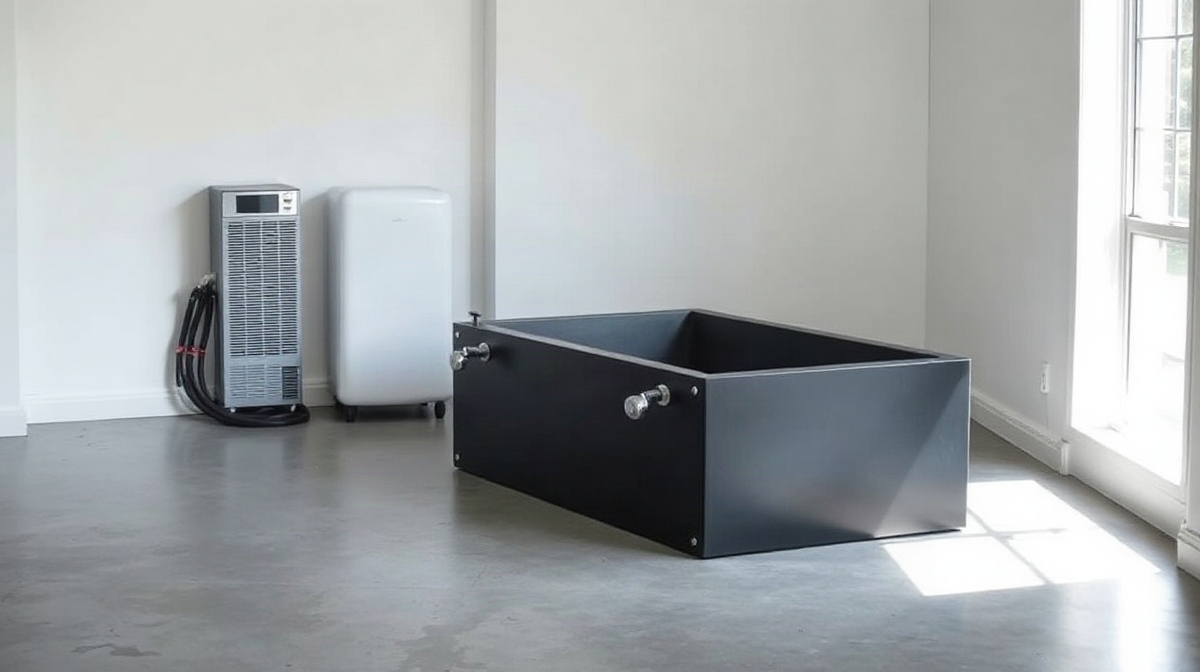
The core hardware is a vapor-compression refrigeration circuit — same physics as a window AC unit, applied to water. A pump pulls water from your tub, runs it through a heat exchanger cooled by refrigerant, and returns chilled water back. Horsepower rating (1/3 HP, 1/2 HP, 1 HP) is the most commonly cited spec, and it loosely predicts both how fast the unit drops water temperature and how cold it can actually hold it.
What manufacturers rarely advertise clearly: ambient air temperature has a significant effect on performance. A 1/3 HP unit might hold 50°F comfortably in a 65°F room but struggle to reach 42°F in a 90°F garage. Always check the rated ambient operating range on the spec sheet before buying.
Sanitation is the variable most buyers underweight. A chiller circulates the same water indefinitely, which means biofilm and bacteria can accumulate unless you treat the water regularly — skipping that step is a recurring complaint across owner review threads.
How much does a cold plunge machine cost to run?
Electricity, water treatment, and filter replacement are the three recurring costs.
On electricity: a 1/3 HP chiller draws roughly 200–350 watts during active cooling, dropping to a maintenance cycle once it hits target temperature. At the U.S. average residential rate of approximately $0.17/kWh (per U.S. Energy Information Administration data), four to six hours of active cooling per day runs roughly $0.14–$0.36 per day — somewhere between $50 and $130 per year, depending on ambient conditions and how well the tub is insulated. A good cover makes a real difference because the chiller cycles less.
Water treatment runs $20–$30 per 32 oz bottle, typically covering two to four months of weekly dosing on a standard 100-gallon tub, based on manufacturer usage guidance. Filter cartridges, where applicable, add another $30–$60 per year as a general estimate. Total annual operating cost for a home setup is realistically $100–$250, not counting the initial hardware.
The products worth considering
Best overall standalone chiller: 1/3HP Cold Plunge Chiller (B0DYJ7S4D8)
Per the product listing, this unit is rated to cool water down to approximately 39°F, with a built-in pump and filter. At 4.3 stars across 183 verified reviews, it’s the better-reviewed of the two 1/3 HP chillers readily available on Amazon. Owners on the listing report hitting 42–50°F within two to four hours on a 100-gallon tub — though results shift with ambient temperature. It lists at $399 as of October 2026.
Paired with any compatible vessel — inflatable or rigid — this is the most accessible entry into a no-ice setup. The 3.7-star sibling (B0DP4D4V4Y, $369 as of October 2026) costs $30 less, but the reviews are noticeably mixed, with a recurring complaint about temperature consistency. A 0.6-star gap is wide enough to justify spending the extra $30 for most buyers.
Best budget tub to pair with a chiller: Ice Bath Cold Plunge Tub 105 Gallons (B0CSK9CK4X)
No chiller here — vessel only. At $63.99 as of October 2026, a 105-gallon XL tub with a cover is the obvious starting point if you’re buying a chiller separately and don’t want to overpay for a container. Its 4.2-star rating across 750 reviews is solid for the price point. Owners note the included cover helps retain temperature between sessions, which can reduce chiller run time.
The build is functional, not refined. The material is thin enough that without the cover you’re fighting ambient heat constantly, and there’s nothing elegant about it. It holds water and holds up. That’s the whole case for it.
Best water treatment: Ouster 3in1 Cold Plunge Water Treatment (B0DCKFWYZ6)
At $29.97 as of October 2026 for 32 oz, the Ouster is the highest-rated and most-reviewed cold plunge maintenance product in this category on Amazon — 4.5 stars across 560 reviews. The “3in1” formulation is described by the manufacturer as targeting algae, bacteria, and oxidation in a single weekly dose. Owners consistently report cleaner water compared to leaving the water untreated, per review threads on the listing.
A note on generic pool chemicals: they can work but are often formulated for much larger volumes and higher dilution ratios, so concentration and pH management require more care in a small cold plunge tub. Purpose-built treatments remove that guesswork.
Two AquaDoc alternatives worth knowing: B0FGZM7Y51 at $23.99 for 32 oz as of October 2026, and B0GZWQBKN4 at $19.99 for 16 oz as of October 2026. Fewer reviews on both, but either is a reasonable backup if the Ouster is out of stock.
Premium option: BlueCube integrated cold plunge systems
BlueCube pairs its own insulated acrylic tubs with commercial-grade chillers and ozone sanitation. Their Classic Pro model, as listed on the BlueCube site, is spec’d to reach 37°F and includes what the brand calls the RiverMode circulation system — a multi-jet mixing setup intended to address uneven water temperature distribution, a recognized limitation of single-return-jet chiller setups. Whether RiverMode eliminates that entirely is something owner forums debate, but the underlying problem it addresses is genuine. The Classic Pro runs approximately $4,500 at current list pricing as noted on the BlueCube website; other configurations span roughly $3,000–$8,000+ depending on size and options.
That price tier is aimed at daily plungers who care about long-term vessel durability and consistent temperature without managing water chemistry as frequently — not someone who just started the habit or is watching spend closely. Per the BlueCube product overview, commercial-grade chillers in integrated systems are designed to hold temperature more consistently than entry-level consumer units, which can reduce chiller cycling — though real-world electricity savings versus a smaller consumer unit will depend heavily on individual use patterns and ambient conditions.
What cooling speed should you realistically expect?
On a 100-gallon tub starting at room temperature (~70°F) in a climate-controlled indoor space, a 1/3 HP chiller will typically reach 50°F in roughly two to four hours, per manufacturer spec sheets and patterns reported in owner reviews. Getting to 40°F may take six to eight hours or longer. These figures are drawn from product listings and are consistent with patterns across owner review threads — independent controlled timing tests have not been conducted by this team.
If you need water reliably below 45°F, a 1/3 HP unit can manage indoors in a conditioned space. In a hot garage or outside in summer, the same unit may plateau well short of that target. A 1/2 HP or larger unit — or an integrated system with a more powerful compressor — is the honest answer for those conditions.
What the research actually says about cold water immersion
The Machado et al. 2022 meta-analysis, published in the British Journal of Sports Medicine (doi: 10.1136/bjsports-2021-104876), found that research suggests cold water immersion is effective for reducing delayed onset muscle soreness compared to passive recovery. That’s a specific, peer-reviewed finding — not a wellness marketing claim. The commonly cited target range of 50–59°F (10–15°C) for 10–15 minutes reflects protocols referenced in the sports science literature, though individual study designs vary.
This article does not constitute medical advice. One hard caveat worth stating plainly: a sudden plunge into very cold water triggers an immediate cardiovascular stress response — heart rate spikes, blood pressure surges, and peripheral vasoconstriction occurs within seconds, as described in published physiology literature (see: Experimental Physiology, PMC3763484). That response is the mechanism healthy users seek. But for anyone with a cardiac history, Raynaud’s disease, or cold urticaria, that same response is a risk. Consult a physician before starting a cold water immersion practice. This isn’t boilerplate — the physiology is why it matters.
Before you buy: what to actually check
Where is the unit living? Most 1/3 HP chillers are rated for ambient temps up to 85–95°F per their spec sheets. Exceed that ceiling and performance degrades sharply.
Tub insulation matters more than most buyers expect. A cover cuts heat gain between sessions and reduces how hard the chiller has to work. The 105-gallon tub above includes one; if yours doesn’t, budget for one separately.
Match HP to tank size. A 1/3 HP unit is generally rated for 50–130 gallons per manufacturer guidance. Bigger tanks need more power, and undersizing is the most common buyer mistake. The unit won’t break — it just won’t reach the temperatures you want.
Figure out drainage before the tub is full. Even with water treatment, you’ll drain and refill periodically. 105 gallons is a lot of water to have nowhere to go.
Noise. The B0DYJ7S4D8 listing advertises sub-40 dB operation. Owner reviews on the listing and in cold plunge community forums consistently put the real-world noise level noticeably higher — described as closer to quiet-conversation level. Fine for a home gym, worth thinking about if the unit shares a wall with a bedroom.
Frequently asked questions
How cold can a 1/3 HP chiller get?
Most 1/3 HP cold plunge chillers are spec-rated to reach approximately 39–42°F (4–6°C) per manufacturer listings. Real-world performance varies with ambient temperature: in a climate-controlled indoor space (65–75°F), reaching 42°F is achievable per owner reports. In a hot garage or outdoors in summer, the same unit may plateau well short of that. Always check the manufacturer's rated ambient operating range before buying.
How long does it take a cold plunge chiller to cool water?
On a 100-gallon tub starting at room temperature (~70°F), a 1/3 HP chiller typically takes 2–4 hours to reach 50°F and potentially 6–8 hours or longer to reach 40°F under ideal indoor conditions, per manufacturer spec sheets and owner reviews. Using an insulating cover between sessions significantly reduces subsequent cool-down times because the chiller only has to recover a smaller temperature differential.
How much does it cost to run a cold plunge chiller per month?
A 1/3 HP chiller draws roughly 200–350 watts during active cooling. At the U.S. average residential electricity rate of approximately $0.17/kWh (per U.S. Energy Information Administration data), active cooling for 4–6 hours per day costs approximately $0.14–$0.36/day — roughly $4–$11 per month in electricity. Adding water treatment ($20–$30 per bottle lasting 2–4 months per manufacturer guidance) and occasional filter replacement, annual operating costs typically land between $100 and $250 for a home setup.
Do I need to treat the water in a cold plunge chiller system?
Yes. A chiller recirculates the same water continuously, creating conditions where bacteria and biofilm can accumulate. Purpose-built cold plunge water treatments (like the Ouster 3in1 or AquaDoc products) are formulated for the small volume and skin-contact frequency of cold plunge use. Generic pool chemicals can work but are often formulated for much larger volumes and may require careful concentration management for small-tub applications. Most manufacturers recommend a weekly treatment dose and a full drain-and-refill every 1–4 weeks depending on usage frequency.
What size chiller do I need for a 100-gallon tub?
A 1/3 HP chiller is generally rated for tubs in the 50–130 gallon range per manufacturer specs, making it appropriate for most standard home cold plunge setups. For larger tubs (150+ gallons), or if you need to cool water in a high-ambient-temperature environment, a 1/2 HP or larger unit will perform more reliably. Undersizing the chiller is the most common buyer mistake — it doesn't damage the unit, but it means slower cool-down and difficulty holding very low target temperatures.
Sources
- U.S. Average Retail Price of Electricity — Residential — U.S. Energy Information Administration
- Cold water immersion for muscle soreness: a systematic review and meta-analysis (Machado et al., doi: 10.1136/bjsports-2021-104876) — British Journal of Sports Medicine
- Cold Water Immersion: Kill or Cure? — National Center for Biotechnology Information / Experimental Physiology
- 1/3HP Cold Plunge Chiller, Ice Bath Water Chiller for Any Tub — Product Listing — Amazon
- 1/3 HP Cold Plunge Chiller for Ice Bath & Home Cold Therapy — Product Listing — Amazon
- Ice Bath Cold Plunge Tub with Cover 105 Gallons — Product Listing — Amazon
- Ouster 3in1 Cold Plunge Water Treatment — Product Listing — Amazon
- AquaDoc Cold Plunge Water Treatment 32oz — Product Listing — Amazon
- BlueCube Cold Plunge — Product & Spec Overview — BlueCube Baths