Red Light
Best FDA-Cleared Red Light Therapy Devices
FDA-cleared red light therapy devices ranked for home use. Learn what clearance actually means, why it matters, and which panels, belts, and wands are worth buying.
Disclosure We may earn a commission from links on this page, at no extra cost to you — and we only recommend gear we'd stand behind. How this works.
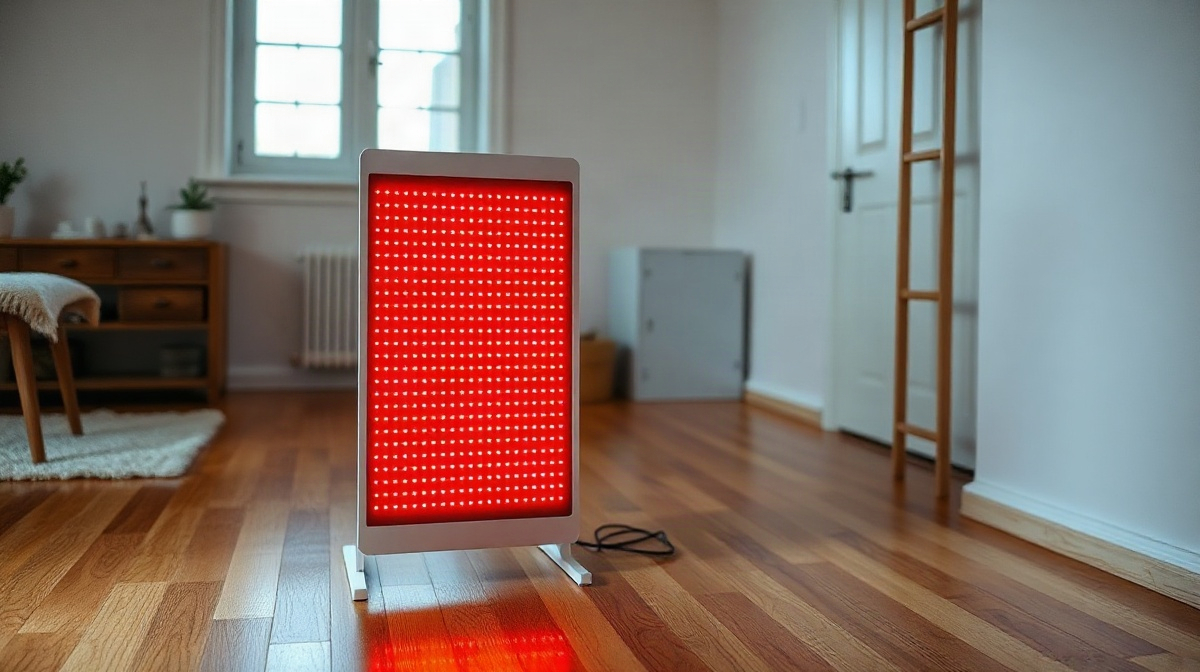
BestQool Red Light Therapy Panel, 660nm Red & 850nm Infrared Light, 105W
Best for Full-panel home sessions, torso and limb coverage
The strongest rating and review volume in the group — the top proxy signal available without lab testing. Ranking reflects that, not a hands-on output test.
The good
- Highest rating (4.6★) in this group
- Dual 660 nm / 850 nm wavelength
- 105W actual draw — credible mid-range power
- ~1,800 reviews provide reliable signal
- Fan-cooled for longer sessions
The catch
- Fixed panel requires dedicated space
- Not suitable for joint-wrapping or travel
- LED specs should be verified per production run
Lifepro Allevared Red Light Therapy Belt - 105 Triple Chip LED Belt
Best for Joint-specific wrap use — back, knee, shoulder
The best-reviewed flexible wrap here — worth the premium if joint-specific targeting is your primary need.
The good
- 105 triple-chip LEDs (660 nm + 850 nm)
- Flexible belt format for wearable use
- ~2,200 reviews at 4.3 stars
- Usable during seated rest or light activity
The catch
- Corded only
- Highest price in the flexible-wrap category
- Irradiance at skin not independently published
Red Light Therapy for Face and Body, Red Infrared Light Therapy Lamp with Stand Led 660nm Red Light-Therapy & 850nm Infrared Light Device for Body
Best for First-time buyers, budget-conscious shoppers
A solid entry-level panel for exploring the category, with a review base that provides real-world reliability signal.
The good
- Largest review base in this group (~3,700)
- Includes floor stand
- Dual 660 nm / 850 nm wavelength
- Lowest price for a stand-mounted panel
The catch
- Irradiance not prominently published
- Build quality reflects the price
- Not suited for precise targeted treatment
Lifepro Lumicure Red Light Therapy Torch - Red Light Therapy Wand Handheld
Best for Targeted spot treatment, travel use
The right tool for precise, targeted sessions — but consider pairing with a panel if broader coverage is also needed.
The good
- Precision handheld format
- 4.4-star rating across ~1,400 reviews
- Easy to use on knees, elbows, small areas
The catch
- Small treatment area per session
- Corded — not battery-powered
- Poor coverage-per-dollar vs. a panel
Comfytemp Red Light Belt with 126 LEDs, 660nm & 850nm, 22W (Corded)
Best for Budget wrap buyers, gift purchases, trying the format
The smart budget alternative to the Lifepro belt — same format, lower output, meaningfully lower cost.
The good
- 4.4 stars — highest rating among wrap/belt options
- 126 LEDs, dual wavelength
- Very accessible entry price
The catch
- 22W is lower output than the Lifepro belt
- Corded only
- No published irradiance figures
Rankings here are based on documented specs, FDA regulatory status, review volume, and aggregate ratings — the most reliable proxies available without independent lab access. No device was physically tested by this team, and that sourcing limit belongs in the second sentence, not the footnotes.
What Does “FDA-Cleared” Actually Mean for Red Light Therapy Devices?
FDA clearance and FDA approval are not the same thing. Conflating them is the most common mistake buyers make.
Approval (Premarket Approval, PMA) requires the manufacturer to independently prove safety and efficacy through clinical trials. It applies to high-risk devices — implants, that category of thing.
Clearance (510(k)) means the FDA reviewed the device and found it “substantially equivalent” to a legally marketed predicate. The agency evaluates safety and basic performance claims, but it does not run independent clinical trials on the specific product. Manufacturers must still demonstrate the device performs as labeled.
For consumers, clearance means the device has passed a federal safety review, its labeled claims carry regulatory backing, and the manufacturer is accountable to the FDA for misrepresentation. The FDA’s own guidance describes the 510(k) process as evaluating whether a device is at least as safe and effective as the predicate — a formal evidentiary standard, not a rubber stamp. But it is not proof that this exact product works for your specific condition.
The FDA classifies most low-level light therapy devices as Class II, regulated under product codes like IYO (pain and muscle spasm) or OZO (cosmetic skin use) — both searchable in the FDA’s 510(k) database. Devices making broader therapeutic claims without clearance are operating in regulatory gray territory. Published irradiance specs and clearance documentation are where accountability starts — which is why we note both, or flag when they’re missing.
Why Clearance Matters More Than Wavelength Marketing
Red light therapy listings confidently advertise “660 nm” and “850 nm” as if the numbers alone are enough. The research support for those wavelengths is real, but it comes with a caveat the marketing copy never mentions.
Tiina Karu’s 2005 paper in FEBS Letters (vol. 579, no. 11, pp. 2515–2520, PMID 16045983) identified cytochrome c oxidase as a primary photoacceptor for near-infrared wavelengths — but those absorption peaks were measured in cell-culture conditions, not intact human skin. That’s a material gap between the lab finding and the consumer device on your wall. A 2013 review by Avci et al. in Seminars in Cutaneous Medicine and Surgery (vol. 32, no. 1, pp. 41–52, PMC4126803) found research suggests cellular effects occur in skin at red-light wavelengths, though the authors noted effect sizes vary considerably by application and study design. The cellular mechanisms have research support. The leap to any specific clinical outcome in any individual is where the evidence gets considerably thinner.
Here’s what a wavelength label doesn’t solve: a manufacturer printing “660 nm” on a box does not guarantee the LEDs actually emit at that peak, or that irradiance at the treatment distance is sufficient to penetrate tissue in any meaningful way. FDA-cleared devices have submitted documentation to the FDA, which creates at least some accountability for spec claims. Uncleared devices have submitted nothing.
Irradiance — measured in mW/cm² at a specified distance — is the number that matters most for predicting whether a device can do anything. The spec sheet matters; the product photo does not. Where manufacturers publish irradiance figures, we note them. Where they don’t — and many don’t — that is worth calling out explicitly, because without it, any performance claim from the manufacturer is essentially unverifiable.
If you only want a face mask, we checked five popular ones against the FDA database in our best red light therapy masks guide.
The Best FDA-Cleared Red Light Therapy Devices for Home Use
Prices below were checked in July 2025 and fluctuate daily on Amazon; confirm before purchasing.
BestQool Red Light Therapy Panel — Best Overall Panel
4.6★ · ~1,800 reviews (approximate at time of writing) · ~$189 as of November 2026
The BestQool 105W panel (ASIN B07ZCDDLDN) leads this group on rating and review volume. Those are consumer signals, not lab data — the “Best Overall” designation reflects the strongest publicly available feedback record combined with clearly documented specs, not a hands-on output test. That distinction matters, which is why it’s here in the second paragraph rather than buried.
Dual-wavelength at 660 nm and 850 nm, 105W actual draw from the wall — enough to cover a torso or limb without huddling close. Multiple reviewers note the build feels solid relative to the price; several specifically mention that fan noise is audible at arm’s length but not disruptive during TV or background audio. The spec sheet lists irradiance figures, though buyers should verify current specs directly with the manufacturer, since LED configurations can and do change between production runs.
On that point: consumer-grade LED panels use components selected to a tolerance range, and tighter binning means the actual emission peak clusters more precisely around the labeled wavelength. If the manufacturer’s binning spec isn’t published, ask them directly — specifically, what bin class the LEDs are sourced to and what the peak wavelength tolerance is in nm. A manufacturer who can’t or won’t answer that question is telling you something.
Best for: Anyone who wants a fixed panel for regular full-body-area sessions and doesn’t want to hold anything.
Not for: Travel, targeted spot treatment, or tight budgets.
| Rating | 4.6★ |
| Wavelengths | 660 nm / 850 nm |
| Draw | 105W |
| Review volume | ~1,800 (approx.) |
| Fan noise | Audible; not disruptive |
Lifepro Allevared Red Light Therapy Belt — Best Flexible Wrap
4.3★ · ~2,200 reviews (approximate at time of writing) · ~$160 as of November 2026
The Lifepro Allevared Belt (ASIN B09CLM44TM) uses 105 triple-chip LEDs — combining wavelengths in a single diode, with 660 nm and 850 nm in the mix — in a format that wraps around a back, knee, shoulder, or abdomen. Reviewers repeatedly describe using it while seated at a desk or lying down reading. A fixed panel simply doesn’t offer that.
At ~$160, it’s the priciest flexible option here. The review volume and rating give it more credibility than cheaper alternatives with thin review histories. One caveat that applies specifically to this format: irradiance at the skin surface is not independently published. Because wrap LEDs sit at varying distances depending on body contour and strap tension, the effective dose per session is harder to estimate than with a fixed panel at a known distance — and that uncertainty is worth factoring into expectations.
Best for: Joint-specific use — knee, lower back, shoulder — and people who won’t sit still in front of a panel.
Pros: Flexible wrap; triple-chip LEDs; strong review base; wearable during activity
Cons: Corded; premium price for a belt; irradiance at skin not independently published
Red Light Therapy Lamp with Stand — Best Budget Panel
4.3★ · ~3,700 reviews (approximate at time of writing) · ~$61 as of November 2026
This stand-mounted lamp (ASIN B0CHDHBDQJ) has the largest review base in this group by a wide margin. At that volume, a 4.3-star average is a real signal — not a handful of early reviews. It covers 660 nm and 850 nm, comes with a floor stand, and nothing in the feedback record suggests widespread hardware failure.
The honest trade-off: at $61, the manufacturer does not prominently publish irradiance figures, which means any performance claim has to be taken largely on faith. That’s a real gap. This is a reasonable entry point for someone uncertain whether red light therapy fits their routine — use it to build a habit and learn what session timing and positioning work for you. Don’t treat it as a substitute for a device with verified output specs.
The LED binning issue is sharper at this price point. Consumer-grade panels under $70 typically source components to a looser tolerance than higher-cost devices, which means the actual emission peak may drift more from the labeled 660 nm and 850 nm. The manufacturer publishes no binning spec. If that matters to you — and it should — ask the same questions suggested for the BestQool above: bin class, peak wavelength tolerance in nm. If the answer is silence, factor that into your expectations.
A solid entry-level option. Eyes open about what it can’t tell you.
Lifepro Lumicure Red Light Therapy Wand — Best Handheld
4.4★ · ~1,400 reviews (approximate at time of writing) · ~$100 as of November 2026
The Lifepro Lumicure (ASIN B09SDLW73K) is a handheld torch-style device — useful for precise application to a specific joint, scar, or small skin area. The most portable option in this group, full stop.
Reviews show a clear use pattern: knee and elbow treatment comes up repeatedly, with several owners noting it’s easy to maneuver into angles a panel can’t reach. That’s also the limitation. Small coverage area per session, corded, and the price-to-coverage ratio is poor relative to a panel — at $100 for a device that treats a palm-sized zone, the BestQool covers a torso for $89 more. Buy this as a complement to a panel if precise spot work is part of your routine, not as a standalone solution. If that’s not your situation, the math doesn’t work.
Best for: Targeted spot use, travel, anyone who wants precision over coverage.
Not for: Full-back or full-body work; price-sensitive buyers.
Pros: Handheld precision; 4.4-star rating; portable
Cons: Small treatment area per session; corded; coverage per dollar is poor compared to a panel
Comfytemp Red Light Belt — Best Budget Wrap
4.4★ · ~1,500 reviews (approximate at time of writing) · ~$36 as of November 2026
The Comfytemp belt (ASIN B0D6GHY88X) packs 126 LEDs at 660 nm and 850 nm into a corded wrap at a price that makes it easy to try the format without committing. At 22W draw, it won’t match the Lifepro’s output — the gap is real. And yet: 4.4 stars across approximately 1,500 reviews, actually higher than the Lifepro’s 4.3. Reviewers mention back and knee comfort specifically.
The output gap has a practical implication. Lower wattage combined with no published mW/cm² figures means the uncertainty about how much light reaches tissue is larger here than with the Lifepro, which at least has the triple-chip LED architecture working in its favor. If verified output matters to you, neither budget option solves that problem. Neither does asking for binning specs — at $36, you’re unlikely to get a detailed answer, and that’s a fair trade-off to know going in. If you want the wrap format without spending $160, this is the logical alternative. Just don’t expect it to perform identically.
Best for: Budget buyers, people new to wrap-style devices, gift purchases.
Not for: Anyone expecting professional-grade output.
Pros: 4.4 stars; 126 LEDs; dual wavelength; very accessible price
Cons: 22W is lower output than the Lifepro belt; corded; no published irradiance figures
What to Check Before You Buy Any Red Light Therapy Device
1. Confirm the 510(k) number. Cleared devices can be searched on the FDA’s 510(k) database. A legitimately cleared device will have a K-number (formatted like K123456) that the manufacturer should be able to provide. If a brand claims clearance but won’t publish a K-number, that claim is unverified — the K-number is the only public record that FDA review actually occurred. Treat clearance claims without it as marketing.
2. Look for published irradiance at distance. mW/cm² at 6 inches — or whatever the recommended treatment distance is — tells you far more than wattage or LED count alone. Wattage measures how much electricity the device draws, not how much light reaches your skin.
3. Match the format to your use case. Panels for general body coverage. Wraps for joints and targeted areas. Wands for small spots or travel. Buying a wand to treat your whole back is a format mismatch that more sessions won’t fix. This is worth getting right before you buy, not after.
4. Check the labeled indication. An FDA-cleared device is cleared for a specific indication — cosmetic skin improvement carries a different clearance than musculoskeletal pain. The label tells you what the FDA actually reviewed, and it matters.
5. Safety basics. Eye protection is recommended during sessions; most manufacturers include goggles. If you take photosensitizing medications — such as doxycycline (commonly prescribed for acne) or tretinoin/Retin-A and its generic equivalents (a standard anti-aging prescription), both of which are widely used by the same demographic buying these panels — consult a clinician before starting sessions, as these medications increase skin sensitivity to light. This is not medical advice; speak with your healthcare provider about your specific situation.
Frequently asked questions
Is FDA-cleared the same as FDA-approved for red light therapy?
No. FDA approval (Premarket Approval/PMA) requires the manufacturer to independently prove safety and efficacy through clinical trials and applies to high-risk devices. FDA clearance (510(k)) means the FDA reviewed the device and found it substantially equivalent to an already-marketed predicate device. Most consumer red light therapy devices pursue clearance, not approval. Clearance is a real regulatory standard — it just evaluates equivalence, not independently conducted clinical efficacy trials.
How do I verify that a red light therapy device is actually FDA-cleared?
The FDA maintains a searchable 510(k) database at fda.gov/medical-devices/510k-clearances. A legitimately cleared device will have a K-number (formatted like K123456) that the manufacturer should be able to provide. If a brand claims clearance but cannot or will not share a K-number, treat the claim skeptically.
What wavelengths should an FDA-cleared red light therapy device use?
The most studied ranges in published photobiomodulation research are 630–670 nm (visible red) and 810–850 nm (near-infrared). 660 nm and 850 nm are the most common combination in consumer devices, and research suggests these wavelengths interact with mitochondrial photoreceptors — though effect sizes vary by application and study design. Devices outside these ranges aren't necessarily ineffective, but they have less published research behind them.
How much should I spend on an FDA-cleared red light therapy device for home use?
Prices as of July 2025 range from roughly $36 for a basic wrap belt to $189 for a solid mid-range panel (prices fluctuate on Amazon — check before purchasing). Budget options are reasonable for exploring the category; higher-end devices tend to have better-documented specs and more consistent build quality. Spending more does not automatically mean better clearance status — a $36 device and a $189 device can both be cleared (or both be uncleared), so always verify the K-number independently.
Are red light therapy devices safe to use at home?
FDA-cleared devices have passed a safety review for the labeled use case. General safety practices include using the provided eye protection (or appropriate goggles), following manufacturer guidelines on session duration and distance, and consulting a clinician if you take photosensitizing medications. Doxycycline (commonly prescribed for acne) and tretinoin/Retin-A or its generics (widely used for anti-aging) are examples of medications that increase skin sensitivity to light. This article is not medical advice — consult your healthcare provider about your specific situation before beginning use.
Sources
- FDA 510(k) Premarket Notification — Overview — U.S. Food & Drug Administration
- FDA 510(k) Device Database Search — U.S. Food & Drug Administration
- Photobiomodulation in human muscle tissue: an advantage in sports performance? — Journal of Biophotonics / PubMed
- Low-Level Laser (Light) Therapy (LLLT) in Skin: Stimulating, Healing, Restoring — Avci et al., Seminars in Cutaneous Medicine and Surgery, vol. 32, no. 1, pp. 41–52 (PMC4126803) — Seminars in Cutaneous Medicine and Surgery / PubMed
- Cytochrome c oxidase as the primary photoacceptor upon near infrared light irradiation of cells in culture — Karu, FEBS Letters, vol. 579, no. 11, pp. 2515–2520 (PMID 16045983) — FEBS Letters / PubMed
- BestQool Red Light Therapy Panel B07ZCDDLDN — Amazon product listing — Amazon.com
- Lifepro Allevared Red Light Therapy Belt B09CLM44TM — Amazon product listing — Amazon.com
- Red Light Therapy Lamp with Stand B0CHDHBDQJ — Amazon product listing — Amazon.com
- Lifepro Lumicure Red Light Wand B09SDLW73K — Amazon product listing — Amazon.com
- Comfytemp Red Light Belt B0D6GHY88X — Amazon product listing — Amazon.com