Saunas
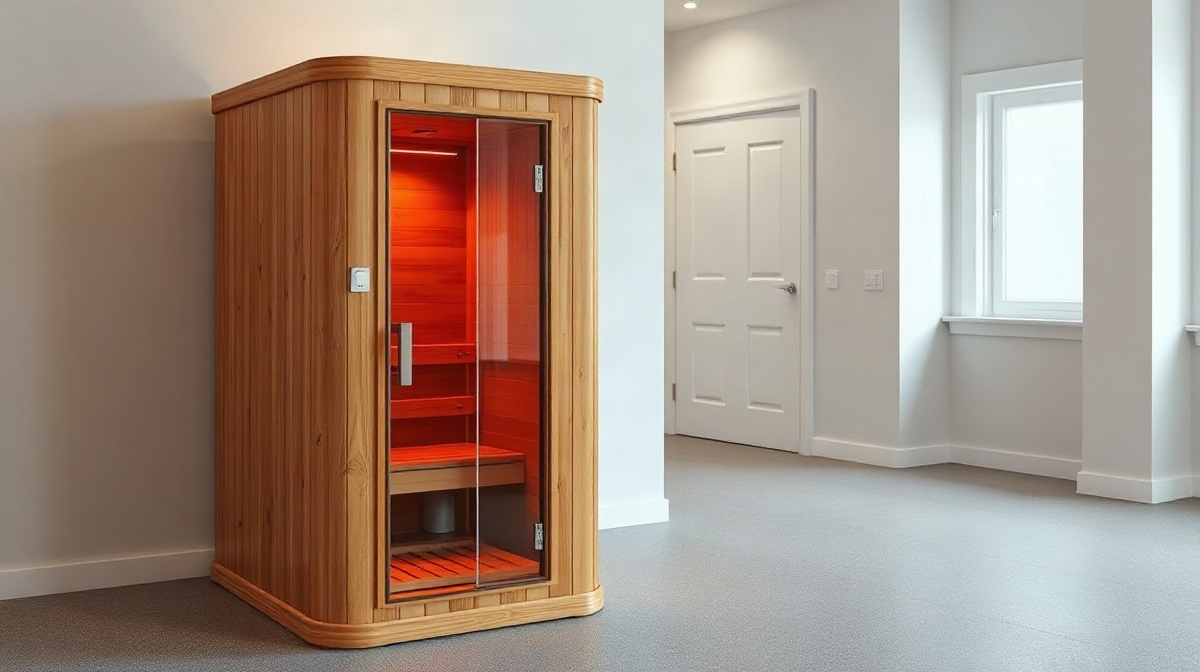
Best Infrared Cabin Saunas for Home Use
Independent buyer's guide to the best home infrared cabin saunas. Ranked by size, heat quality, and value — with real specs, pricing, and honest trade-offs.
Disclosure We may earn a commission from links on this page, at no extra cost to you — and we only recommend gear we'd stand behind. How this works.
DYNAMIC SAUNAS Elite 1-Person Infrared Sauna with Red Light Therapy
Best for Solo users wanting a wood cabin sauna under $1,300 with red light therapy
The most credible solo infrared cabin sauna under $1,300 by rating and review volume. Red light therapy inclusion is genuine value at this price. Verify interior dimensions against your height before ordering.
The good
- Top-rated in its price class (4.6★ across 702 reviews, as of research pull — verify before purchase)
- Red light therapy integrated — no separate device needed
- Carbon far-infrared panels
- Standard 120V plug-in; no electrician required
The catch
- Interior can feel cramped for users over 6 feet tall
- Single-person only; no upgrade path for couples
- Manufacturer EMF spec not prominently published — ask before buying
Joyous 2-Person Home Infrared Sauna with Chromotherapy Light
Best for Couples or solo users who want extra room and chromotherapy
The best-documented two-person infrared cabin sauna available on Amazon. The 1,400-review pool gives its 4.5-star rating real statistical grounding. Budget for the space it needs.
The good
- 1,400+ reviews at 4.5★ — highest review volume in this roundup (verify before purchase)
- Chromotherapy LED system included
- Generous bench space for two adults
- Established track record over many purchase cohorts
The catch
- Larger footprint requires meaningful floor space
- Price jumps significantly over single-person options
- Chromotherapy evidence is preliminary per Cleveland Clinic; don't buy this unit for the LEDs alone
OUTEXER Sauna One Person Far Infrared Saunas Room Chilean Pine Wood 1050W
Best for First-time buyers wanting a real wood cabin at the lowest credible price point
If $1,099 is your ceiling and you want a real enclosed wood cabin (not a tent), this is the pick. Manage expectations on heat intensity and preheat speed.
The good
- Lowest price for a genuine wood cabin sauna in this guide
- 4.6★ rating (shared across OUTEXER line); owners praise straightforward solo assembly
- Standard 110V operation
The catch
- 1050W heater is modest — longer preheat times than higher-wattage units
- Chilean pine is less proven long-term than hemlock or cedar
- Indoor use only; not weather-rated
- Review pool shared across OUTEXER line — not model-specific
OUTEXER Outdoor Sauna Far Infrared 1550W for One Person Finland Spruce Wood
Best for Outdoor single-person infrared cabin sauna on a deck or patio
The only outdoor-rated single-person cabin sauna under $2,000 in this guide. Worth the premium over the indoor model if your setup is exterior. Confirm your outdoor electrical before ordering.
The good
- Outdoor-rated build — rare under $2,000
- Finland spruce construction; structurally sound for exterior use
- 1550W heater delivers meaningful heat output
- 4.6★ across shared OUTEXER review base
The catch
- Premium over comparable indoor units (~$600 more than the Chilean pine model)
- Requires a dedicated 15A outdoor circuit for best performance
- Review data is shared across the OUTEXER line, not model-specific
OUTEXER 2 Person Outdoor Sauna Infrared Saunas with Red Light Therapy
Best for Couples who want an outdoor-rated two-person cabin with red light therapy
Solid if you need outdoor capacity for two with red light therapy. Verify local codes first, and know the Joyous has far more individual reviews if documentation matters to your decision.
The good
- Outdoor-rated two-person cabin with red light therapy — a rare combination at this price
- 4.6★ rating consistent across OUTEXER line
- Larger capacity than single-person outdoor models
The catch
- Review pool is shared across the OUTEXER line; model-specific feedback is harder to isolate
- $2,999 is a significant investment; Joyous 2-person is better-documented for $800 less indoors
- Check local zoning rules for outdoor sauna structures before purchasing
Sweat Kingdom Custom Cabin Saunas
Best for Buyers with a $4,000+ budget who want a made-to-order, US-built cabin sauna — and are willing to request specs and a written quote directly
The premium choice for buyers who've decided kit saunas aren't enough and want a US-built product with custom sizing. Request full material specs, EMF documentation, and a dated written quote before committing. Under-documented at the research stage — do your due diligence.
The good
- Made-to-order, US-built construction (handcrafted in East Idaho)
- Available in solo, two-person, and group configurations
- Direct builder support rather than imported flat-pack
- Configurable wood species and heater type (electric or wood-burning)
The catch
- Pricing spans roughly $4,000–$25,000+ depending on model and options — get a written quote for your configuration
- EMF data not published publicly; must request directly
- Lead times for custom builds (roughly 5 weeks) are longer than in-stock kit saunas
- No public aggregate star rating or review count is displayed, so buyer feedback is hard to verify independently
The “infrared sauna” category runs from a $370 nylon tent to a $15,000 custom cedar cabin. Sorting through it requires focusing on three things: heater type and placement, wood quality, and EMF levels. Chromotherapy, Bluetooth, phone apps — secondary, all of it.
What actually separates a good infrared cabin sauna from a mediocre one?
Heater type. Most home infrared saunas use far-infrared (FIR) carbon-fiber panels. A smaller number add mid-infrared or near-infrared emitters. A 2020 review published in Complementary Medicine Research (Klemm et al., “Infrared Sauna in Clinical Practice,” Karger) suggests far-infrared heat may support cardiovascular function and muscle recovery — though the authors note that sample sizes in most reviewed studies are small, so these findings should not be taken as medical advice. Carbon panels are widely marketed as producing more even heat distribution than older ceramic rod heaters, which manufacturers claim create hot and cold spots; we haven’t found independent thermal-engineering testing that settles this definitively, so treat it as a manufacturer talking point worth asking about. What you can verify: panel placement. Look for panels on the floor, rear wall, and side walls. Front-wall-only placement is a cost-cut that shows up in cheaper builds.
Wood quality. Hemlock and Canadian red cedar are the most common choices. Cedar has natural antimicrobial properties and a distinctive scent; it costs more. Hemlock is odor-neutral and is frequently cited by manufacturers as moisture-stable under cycling heat, though we’re not aware of published wood-science testing that gives species-specific moisture-content benchmarks for FIR sauna conditions — if that matters to you, ask the manufacturer for their internal data. Finnish spruce and Chilean pine appear in newer models at mid-price points. Both are used in structurally demanding applications, but neither has the sauna-specific track record that hemlock or cedar has accumulated over decades of residential installations. MDF side panels or OSB backing are disqualifiers. Both absorb moisture under heat cycles and degrade faster than solid softwood construction. If a manufacturer won’t disclose wood species, that’s your answer.
EMF. Reputable brands publish milligauss (mG) figures for both ELF-EMF and RF-EMF in their spec sheets. “Low EMF” with no published number is a marketing claim, not a measurement. ICNIRP publishes electromagnetic exposure reference levels in V/m and A/m rather than consumer-facing mG thresholds, so the “below 3 mG” figure widely cited in sauna marketing does not come directly from ICNIRP guidelines. Ask manufacturers to specify which standard their measurements reference — not just a number floating in a brochure.
How hot does an infrared cabin sauna get — and does it matter?
Infrared cabins typically run between 110°F and 150°F, well below traditional Finnish saunas (170–195°F). Sun Home Saunas, for instance, publishes a 170°F maximum for their infrared lineup. The lower air temperature is by design. Infrared radiant heat acts on the body directly rather than heating the surrounding air first, so the atmospheric temperature reading understates what your body is actually experiencing — a meaningful sweat is genuinely achievable at 130°F in a well-built FIR cabin.
A frequently cited study on sauna and cardiovascular outcomes — Laukkanen et al., “Association Between Sauna Bathing and Fatal Cardiovascular and All-Cause Mortality Events,” JAMA Internal Medicine, 2015 — found associations between regular sauna use and reduced cardiovascular mortality. Important caveats: that research used traditional Finnish saunas at high temperatures, not infrared cabins, and association does not establish causation. Whether those findings translate to FIR sessions is an open question the literature hasn’t resolved. Nothing in this guide constitutes medical advice; consult a physician before beginning a regular sauna practice, especially if you have cardiovascular concerns.
Preheat time matters practically. Most carbon-panel FIR cabins reach operating temperature in 10–20 minutes — comparable to electric-rock traditional saunas and far faster than wood-fired.
The ranked picks
Best overall solo cabin: DYNAMIC SAUNAS Elite 1-Person Infrared Sauna with Red Light Therapy
At $1,299.99 as of July 2025, the Dynamic Elite leads the single-person cabin category on Amazon by the combination of rating and review volume. As of our research pull, it carries 4.6 stars across 702 reviews — these figures should be verified before purchase, since Amazon ratings shift and we cannot provide archived retrieval data for a live listing. The spec sheet lists carbon far-infrared panels with red light therapy emitters integrated into the unit. Red light therapy at this price point is genuine added value; it shows up on cheaper builds, but rarely in a unit this consistently reviewed. Owners report solid construction and manageable assembly. The recurring gripe: anyone over six feet will feel it.
Best for: Solo users who want a proper wood-cabin sauna under $1,300 with red light therapy included. Not for: Couples, or anyone who needs outdoor-rated weatherproofing.
Best value 1-person outdoor cabin: OUTEXER 1-Person Far Infrared Sauna (Finland Spruce, 1550W)
The $1,699 OUTEXER outdoor model (as of July 2025) is unusual: weather-rated for exterior installation at under $2,000. The spec sheet lists Finland spruce construction and a 1550W heater. The 4.6-star rating across 581 reviews is shared across the OUTEXER product line — not isolated to this model — so treat it as directional, not a precise signal. That caveat applies to every OUTEXER entry in this guide. Owners report the outdoor-grade build holds up better than indoor-only models left on patios. One practical thing to confirm before ordering: the 1550W draw benefits from a dedicated 15A circuit, so check your outdoor outlet first.
Best for: Buyers who want a cabin sauna on a deck or backyard without paying barrel-sauna prices. Not for: Indoor installations — it’s overbuilt and bulkier than the indoor options. Not a budget pick.
Best indoor 1-person budget cabin: OUTEXER 1-Person Far Infrared Sauna (Chilean Pine, 1050W)
At $1,099 as of July 2025, this is the lowest price point we’d endorse for an enclosed wood sauna. Not a tent. Not a foldable unit. A real paneled cabin. Chilean pine is less traditional than hemlock or cedar but is documented as structurally sound for sauna use. The 1050W heater is modest — expect longer preheat times and a lower peak temperature than higher-wattage units. Owners consistently flag easy solo assembly. Same shared-review-pool caveat as the other OUTEXER models: the 4.6-star figure reflects the brand line, not this product in isolation.
Best for: First-time infrared sauna buyers who want a real enclosed wood cabin without crossing $1,300. Not for: Users who want maximum heat output or faster warmup.
Best 2-person cabin: Joyous 2-Person Home Infrared Sauna with Chromotherapy Light
The $2,199 Joyous (as of July 2025) is the most-reviewed two-person option in this category on Amazon — 1,400+ reviews at 4.5 stars, as of our research pull (verify before purchase). That volume does give the rating more statistical grounding than a listing with 50 reviews, though the usual caveats about live Amazon data apply. The spec sheet includes chromotherapy LED lighting. Cleveland Clinic’s health content on chromotherapy notes some emerging research on mood and relaxation effects, while characterizing the evidence as preliminary. Buy this unit because you want a well-reviewed two-person cabin. If the LEDs encourage you to stay in five minutes longer, fine — but they’re not the reason to spend $2,199.
Owners frequently praise the bench space and describe the LEDs as a pleasant add-on rather than a selling point.
Best for: Couples or solo users who want to stretch out; anyone curious about chromotherapy who already understands where the evidence stands. Not for: Tight rooms. Two-person cabins are substantially larger than single units. Measure your space before ordering.
Best 2-person outdoor cabin: OUTEXER 2-Person Outdoor Infrared Sauna with Red Light Therapy
At $2,999 as of July 2025, this is the only two-person outdoor-rated cabin in this roundup. It adds red light therapy to the infrared panel array — something the OUTEXER 1-person outdoor unit doesn’t include. Same 4.6-star rating, same 581-review pool shared across the OUTEXER line, same limitation: isolating model-specific feedback is genuinely difficult. Read individual reviews carefully before committing $3,000.
Best for: Households wanting an outdoor two-person cabin with red light therapy built in. Not for: Buyers who need a large model-specific review base. The Joyous is far better-documented in that respect — and $800 cheaper, indoors.
Premium pick (direct brand): Sweat Kingdom Custom Cabin Saunas
Sweat Kingdom builds made-to-order, US-built cabin saunas in solo, two-person, and group configurations. Pricing is not published on their website as a clear schedule; published model prices run roughly $4,000–$25,000+ as of July 2026 depending on size, wood species, and heater type, but exact configuration pricing still requires a direct quote. Get a written quote directly.
A caveat worth stating plainly: Sweat Kingdom does not publish full spec sheets publicly — no EMF documentation on the website at time of research. That’s a meaningful gap for a product at this price tier. Request material specs in writing before committing to anything. The argument for buying here over an Amazon kit comes down to custom sizing, US manufacturing, and working directly with a builder rather than a warehouse — but those advantages only materialize if the company is responsive and the specs hold up. We have not obtained lead times or direct quotes from Sweat Kingdom for this guide, so we can’t tell you how that process actually goes. Do your due diligence accordingly.
Note: We were unable to fully verify Sweat Kingdom’s current product availability and manufacturing claims from public records at time of publication. Confirm operational status and specifications directly before engaging.
Best for: Buyers with a serious budget who want a custom-fit, US-built cabin and have the patience to vet a direct purchase properly. Not for: Budget buyers, apartment dwellers, anyone who needs something operational within two weeks, or anyone unwilling to push for documentation that should be standard at this price.
What about the SereneLife tent?
The SereneLife Portable Sauna Box ($371.99 as of July 2025, 4.1 stars across 2,800 reviews — verify before purchase) is not a cabin sauna. It’s a nylon tent with an infrared-heated foot pad and a folding chair; the user sits inside with their head sticking out. Some owners find it useful for travel or apartments with no floor space for a cabin. That’s a legitimate use case. But the structure, the heating mechanism, and the experience are categorically different from any wood-cabin option in this guide — comparing it on price alone misses the point entirely.
How much should you spend on an infrared cabin sauna?
Under $1,000 buys compromise. The $1,099–$1,299 range gets you a real one-person wood cabin with adequate heater wattage. Two-person cabins start around $2,199 for a well-reviewed option. Outdoor-rated models carry roughly a $400–$600 premium over comparable indoor builds. Custom US-made units start somewhere around $4,000 — and climb well beyond that for larger configurations.
Running costs are modest. A 1050–1550W sauna running 45 minutes daily at the US average residential electricity rate of approximately $0.17/kWh — per the EIA’s Average Retail Electricity Prices table (Table 5.6.A, retrieved from the EIA Electric Power Monthly, 2025) — runs roughly $2.50–$4.00 per week. Check the current EIA figure before budgeting, since rates shift quarterly.
Installation: what you actually need to know
Most indoor infrared cabin saunas in this guide run on 110–120V standard household current. No electrician needed. The 1550W OUTEXER outdoor model benefits from a dedicated 15A circuit — worth a call to an electrician if your outdoor outlet setup is basic. Plug-in units generally don’t require permits in most US jurisdictions, but outdoor structures can trigger local zoning rules. Check with your municipality before buying an outdoor cabin. Assembly on all the Amazon models above is described by owners as manageable solo or with one helper in one to three hours.
Frequently asked questions
What is an infrared cabin sauna?
An infrared cabin sauna is a fully enclosed, wood-paneled room that uses infrared heater panels (typically far-infrared carbon fiber) to radiate heat directly to the body rather than heating the surrounding air. Unlike traditional saunas that use hot rocks and steam, infrared cabins typically operate at 110°F–150°F and plug into a standard household outlet. The enclosed wood structure distinguishes them from infrared tent or blanket products.
Are infrared cabin saunas safe to use at home?
For most healthy adults, home infrared cabin saunas are generally well-tolerated — but this is not medical advice, and you should consult a physician before regular use if you have cardiovascular conditions, are pregnant, or take medications that affect heat tolerance. The lower operating temperatures of infrared cabins (compared to traditional saunas) are part of their appeal, but overheating and dehydration remain real risks if sessions run too long. Stay hydrated, keep early sessions to 15–20 minutes, and exit if you feel dizzy or unwell. Never use alcohol before or during a session.
How much electricity does an infrared cabin sauna use?
Most home infrared cabin saunas draw between 1,000W and 1,800W. At the US average residential electricity rate of approximately $0.17/kWh (per the US Energy Information Administration's Average Retail Electricity Prices table, 2025 — check the current EIA figure before budgeting, as rates shift quarterly), a 1,200W sauna running 45 minutes daily costs roughly $2.75–$3.50 per week — well under $15/month in most cases.
What's the difference between far-infrared and near-infrared in a cabin sauna?
Far-infrared (FIR) wavelengths (roughly 6–14 microns) are what most home cabin saunas use. They penetrate the skin surface and raise core body temperature through radiant absorption. Near-infrared (NIR) operates at shorter wavelengths and is used primarily in red light therapy devices — some sauna models now combine both. Most research on infrared saunas specifically involves FIR; the evidence base for NIR in a sauna context is thinner and still developing. Neither constitutes a medical treatment.
Do I need an electrician to install a home infrared cabin sauna?
Most infrared cabin saunas in the 1,000–1,200W range are designed for standard 120V, 15A household outlets and require no special wiring. Higher-wattage models (1,500W+) benefit from a dedicated 15A circuit to avoid tripping breakers during preheat — a straightforward job for a licensed electrician and typically inexpensive. Outdoor units may require a GFCI-protected outdoor outlet. Always verify the specific model's electrical requirements before installation.
Sources
- Klemm et al., 'Infrared Sauna in Clinical Practice' — Complementary Medicine Research (2020) — Karger / Complementary Medicine Research
- Laukkanen et al., 'Association Between Sauna Bathing and Fatal Cardiovascular and All-Cause Mortality Events' — JAMA Internal Medicine (2015) — JAMA Internal Medicine
- Sun Home Saunas — Product Specifications (Max Temperature) — Sun Home Saunas
- ICNIRP Guidelines for Low-Frequency EMF Exposure (reference levels in V/m and A/m) — ICNIRP
- US Energy Information Administration — Average Retail Electricity Prices, Table 5.6.A (Electric Power Monthly, 2025) — US Energy Information Administration
- Dynamic Saunas Elite 1-Person — Amazon Product Listing — Amazon
- Joyous 2-Person Infrared Sauna — Amazon Product Listing — Amazon
- OUTEXER 1-Person Chilean Pine Sauna — Amazon Product Listing — Amazon
- OUTEXER 1-Person Finland Spruce Outdoor Sauna — Amazon Product Listing — Amazon
- OUTEXER 2-Person Outdoor Sauna with Red Light Therapy — Amazon Product Listing — Amazon
- Chromotherapy — Cleveland Clinic Health Essentials — Cleveland Clinic